
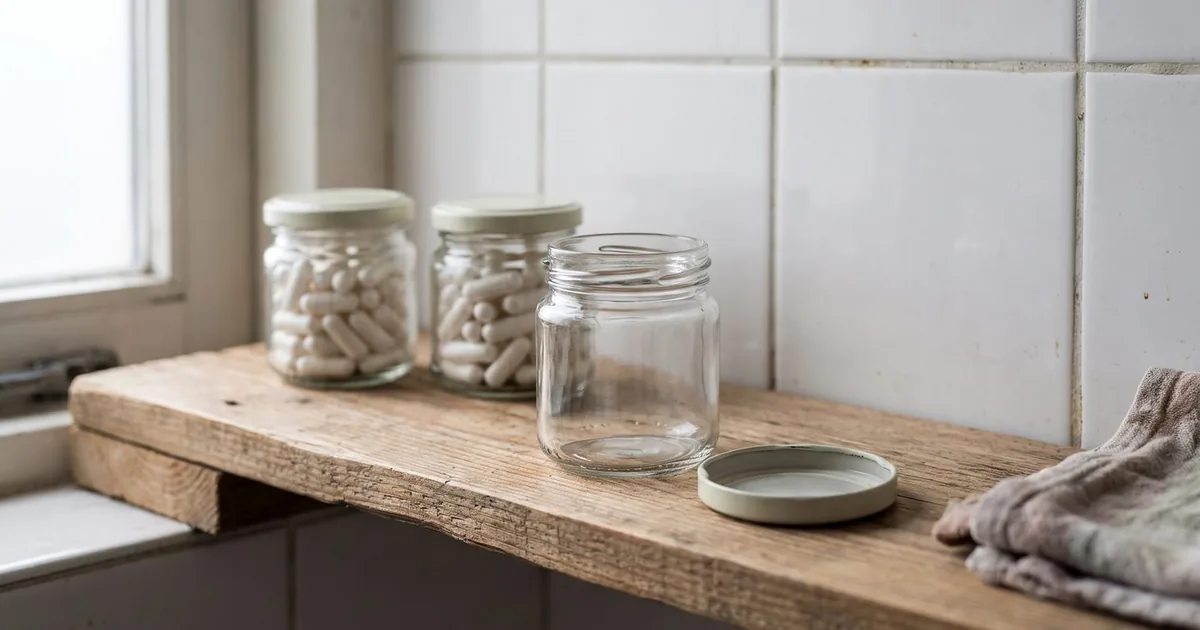
In this article, you will read which supplements for the menopause have been tested, what the large reviews of those studies found, what the Dutch vitamin D advice says at this age and when to see your GP. That matters, because if you search for menopause supplements, you will see the shelf and the studies telling two different stories, and you deserve to hear both. The menopause transition covers the years around your last period. The menopause itself is that last period, which comes on average when you are 51. The transition can begin anywhere between 40 and 60.4 You can read which symptoms are part of it and how long they last in menopause symptoms: which ones are part of it and how long they last. The BioProfile hormone balance scan measures how heavily those symptoms weigh on you and gives you an indication of where you stand today. This is not a diagnosis. It is insight, to see where you stand today and to help you make better choices in your diet and lifestyle. The scan does not point to a cause and does not make a diagnosis. Only a doctor can do that.
Verified by Carlos Mendoza Montano
Doctorate in nutritional biochemistry from the University of Arizona
Checked on 27 October 2026
In short
- Thuisarts says that menopause remedies with herbs, vitamins, black cohosh or phytoestrogens do not help, and that their unwanted effects are uncertain or possibly harmful.1
- In three studies with 393 women, black cohosh did about as well as a dummy pill for the number of hot flushes per day.2
- For vitamin D there is a Dutch recommendation at this age: 10 micrograms a day for women aged 50 to 69, for the bones.3
- The hormone balance scan shows how heavily your symptoms weigh on you today. It is not a diagnosis.
Contents
- Menopause supplements: which ones help?
- Natural menopause supplements: black cohosh
- Natural supplements: soy and red clover
- Experiences with menopause supplements
- Vitamin D: the Dutch advice
- Why you are so tired during menopause
- Menopause and cholesterol
- When to see your GP
- In summary
- Frequently asked questions
Menopause supplements: which ones help?
Thuisarts, the information site of the Dutch GPs, is clear: menopause remedies with herbs, vitamins, black cohosh or phytoestrogens do not help. The page adds that their unwanted effects are uncertain or possibly harmful, so you are better off leaving them on the shelf.1
An American panel of experts reached the same verdict in 2023, after reviewing the research published since 2015. For hot flushes and night sweats, the panel does not recommend supplements, herbal remedies, soy foods, soy extracts or the soy compound equol. Hormone therapy is still the most effective choice for hot flushes, and the options the panel does recommend include cognitive behavioural therapy and clinical hypnosis.5 For you, this means that the question ‘which supplements for menopause’ gets the same short answer for hot flushes in the Netherlands and in America: the list of recommended supplements stays empty.
Natural supplements for the menopause: black cohosh
Black cohosh, zilverkaars in Dutch, is one of the herbs Thuisarts mentions. A Cochrane review brought together 16 studies with 2,027 women around or after the menopause, who took it for 23 weeks on average. In three of those studies, with 393 women, the women who took black cohosh had about as many hot flushes per day as the women who were given a dummy pill, and in four studies with 357 women, their scores for menopause symptoms were no better. In three studies, hormone therapy lowered the number of hot flushes per day clearly more than black cohosh did. The authors conclude that there is not enough evidence to support its use for menopause symptoms.2 In plain words: in the best tests there are, the herb did no better than a pill with nothing in it.
Natural supplements: soy and red clover
Phytoestrogens are the soy and red clover extracts found in other natural menopause remedies. A second Cochrane review brought together 43 studies with 4,084 women with hot flushes or night sweats, and each study lasted at least 12 weeks. It found no convincing evidence that these extracts reduce the number or severity of hot flushes, and red clover extract did about as well as a dummy pill. Extracts high in genistein, a soy compound, at a dose of more than 30 mg a day did consistently lower the number of hot flushes; according to the authors, more research is needed on this. With use for up to two years, they found no signs of unwanted effects on the lining of the womb, the vagina or elsewhere.6 What this means for you: a soy extract high in genistein is an open question, and the evidence is too thin to rely on.
Experiences with menopause supplements
Experiences shared on forums and in reviews are real experiences. A study asks a narrower question: does the remedy work better than a dummy pill? Black cohosh and red clover did not do better.2,6
How menopause feels also goes together with how you view it. In a Dutch study of 2,390 women aged 35 to 64 in the north of the country, women with a negative attitude towards the physical changes reported more symptoms in every area. That link was weaker for hot flushes and night sweats than for psychological and physical symptoms.7 Put simply: how you see the changes and how heavy the symptoms feel go hand in hand, more strongly for mood and physical symptoms than for hot flushes. Which stage carries the most risk for your mood is covered in mental health symptoms during menopause.
Vitamin D: the Dutch advice
The Voedingscentrum does advise vitamin D at this age. Women aged 50 to 69 are advised to take 10 micrograms of vitamin D a day, and everyone aged 70 and over 20 micrograms a day. The Voedingscentrum gives the bones as the reason: vitamin D is important to limit bone loss.3 That advice is about the bones and promises nothing about hot flushes. If you want to know which supplements suit your own situation, BioProfile’s supplement advice is the page for that question.
Why you are so tired during the menopause
Thuisarts links tiredness during the menopause to poor sleep caused by night sweats, and eight in ten women get hot flushes during these years.4 Hot flushes usually last 3 to 7 years;1 the American panel puts it at 7 to 9 years on average, and at more than 10 years for 1 woman in 3.5
A review of studies from 2013 to 2023 found that sleep problems after the menopause are very common. Risk factors included the stage of the menopause, depression, hot flushes and night sweats, a diet with a high glycaemic index, and age, and women without hot flushes had sleep problems too. Poor sleep went hand in hand with a lower quality of life, including depression, anxiety and pain in the muscles and joints, and with more problems at work and in daily activities.8 For you, this means that poor sleep, with or without hot flushes, is one of the things to look at if you are extremely tired, although tiredness can also have other causes.
Menopause and cholesterol
The American SWAN study followed 3,302 women through menopause, with yearly check-ups. After ten check-ups, 1,054 of them had reached their final period without surgery and without prior hormone therapy. Of all the heart risk factors measured, only total cholesterol, LDL cholesterol and apolipoprotein B rose clearly, in the year before and the year after the final period. The researchers read this as an effect of menopause rather than of getting older.9 In plain words: cholesterol is one of the values that can change in these years as an effect of menopause itself.
When to see your GP
Thuisarts recommends making an appointment with your GP if one or more of these points apply to you: your periods are very heavy, which is usually part of the menopause but is sometimes something else, such as a fibroid; you have menopause symptoms and are younger than 40; you have not had a period for more than a year and then lose blood from your vagina; or hot flushes and other menopause symptoms bother you a lot.4
In summary
In this article you read what the research says about supplements for the menopause. Thuisarts and an American panel of experts recommend none for hot flushes,1,5 black cohosh did about as well as a dummy pill,2 and extracts of soy and red clover showed no convincing benefit.6 For vitamin D, there is Dutch advice at this age, for the bones.3 Poor sleep can make you tired, although tiredness can also have other causes,8 cholesterol can rise around your last period,9 and Thuisarts names four signs that mean it is time to see your GP.4
Frequently asked questions
What are the best supplements for the menopause?
For hot flushes, the list in the research stays empty. Thuisarts says that menopause remedies with herbs, vitamins, black cohosh or phytoestrogens do not help.1 For the bones, women aged 50 to 69 are advised to take 10 micrograms of vitamin D a day.3
When do I take menopause supplements?
The Voedingscentrum advises women aged 50 to 69 to take vitamin D every day.3 For menopause blends with herbs or phytoestrogens, Thuisarts advises leaving them on the shelf, because the unwanted effects are uncertain or possibly harmful.1
Why am I so tired during the menopause?
Night sweats can disturb your sleep and make you tired, but tiredness can also have other causes. Thuisarts links tiredness during the menopause to poor sleep caused by night sweats,4 and a review found that sleep problems after the menopause are very common, and that women without hot flushes have them too.8
Does menopause affect your cholesterol?
Yes. In a large American study, total cholesterol and LDL cholesterol rose clearly in the year before and the year after the last period, and the researchers read that as an effect of the menopause rather than of getting older.9
Sources
Every source below was checked on the day this article was published. The numbering follows the text.
- NHG. Ik ben in de overgang en heb opvliegers. Thuisarts.nl. thuisarts.nl
- Leach MJ, Moore V. Black cohosh (Cimicifuga spp.) for menopausal symptoms. Cochrane Database of Systematic Reviews, 2012, Issue 9, CD007244. doi.org/10.1002/14651858.CD007244.pub2
- Voedingscentrum. Vitamine D. Encyclopedie, voedingscentrum.nl. voedingscentrum.nl
- NHG. Ik ben in de overgang. Thuisarts.nl. thuisarts.nl
- The North American Menopause Society. The 2023 nonhormone therapy position statement of The North American Menopause Society. Menopause, 2023; 30(6): 573-590. doi.org/10.1097/GME.0000000000002200
- Lethaby A, Marjoribanks J, Kronenberg F, Roberts H, Eden J, Brown J. Phytoestrogens for menopausal vasomotor symptoms. Cochrane Database of Systematic Reviews, 2013, Issue 12, CD001395. doi.org/10.1002/14651858.CD001395.pub4
- de Boer HEH, Booij SH, Knoeff R, Oldehinkel AJ. Attitudes towards menopause and symptom severity in a large sample of Dutch perimenopausal women. BMC Women’s Health, 2026. doi.org/10.1186/s12905-026-04845-w
- Soares CN, Bajbouj M, Schoof N, Kishore A, Caetano C. Impact of sleep disturbances on health-related quality of life in postmenopausal women: a systematic review. Menopause, 2026; 33(1). doi.org/10.1097/gme.0000000000002633
- Matthews KA, Crawford SL, Chae CU, et al. Are changes in cardiovascular disease risk factors in midlife women due to chronological aging or to the menopausal transition? Journal of the American College of Cardiology, 2009; 54(25): 2366-2373. doi.org/10.1016/j.jacc.2009.10.009
Also read
Written by
See where you start
Answer the questions in the hormone balance scan and your score appears in your dashboard. You can read what the scan measures and what it is based on on the scan page.
Free, about 3 minutes. An analysis of your answers, never a diagnosis.
BioProfile analyses your health status to guide you and your coach. It does not make a diagnosis, only a doctor can do that. Built on validated health questionnaires; the combined BioProfile score is not itself a validated clinical instrument yet. Your answers stay private (GDPR).