
Published sleep research · Read this before you try to make yourself even more tired
No new evening routine. No tracker. A free five minute check that shows which signals in your own answers speak loudest.
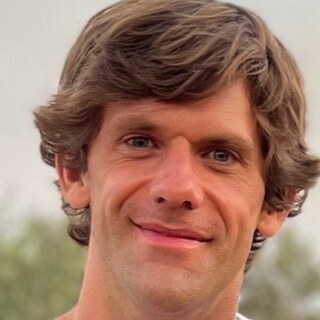
"I'm wrecked all day, and the moment I lie down I'm wide awake."
Say that sentence out loud.
You know your own version. Falling asleep in front of the television and then lying awake in bed. An hour in which the day repeats itself. Waking at three with your head already running. Getting up more tired than you went to bed. Needing twenty minutes and something warm before you are capable of anything. Dropping at three in the afternoon and getting a second wind at eleven at night. Reading the same paragraph twice at your desk.
I am Jesse van der Velde. Not a guru and not a doctor. I study and share what published research says about how a body ages. I have been testing that on myself and with the people I guide for more than fourteen years.
The thought I hear a lot of people say is "then I must not be tired enough yet".
Because the research points to a second system, and getting more tired does nothing to it.

VIDEO SLOT · place a video or embed here
Almost every piece of sleep advice you have been given works on one idea: build up more sleep need.
Skip that nap. Go for a run. Stay up later. Get up earlier. Wear yourself out and sleep will follow.
For some people, on some nights, that works. It is a real way to tackle it, and it is the one everybody knows.
But look at your own evidence. You are already wrecked. If more tiredness were the answer, your evenings would have solved this years ago.
The published literature describes a second system, and pushing on the first one does nothing to it.
In 2016, Alexander Borbély, Serge Daan, Anna Wirz-Justice and Tom Deboer published a reappraisal in the Journal of Sleep Research.¹
What was studied: whether the two process model of sleep regulation still holds up after three decades of use.
How: this is a modelling paper and not an experiment. The authors look at how the model has held up across sleep research, in studies of tiredness and performance, and in work on differences between people.
The findings: the model says that two things run at the same time. Process S is a homeostatic pressure that builds up the longer you are awake and drains away again while you sleep. Process C is driven by the biological clock and determines when your body expects sleep. The model successfully reproduces the timing and the intensity of sleep in very different experiments, and measurements of the suprachiasmatic nuclei, the timekeeper in the brain, indicate that the two act on each other continuously.
Read that again. Being tired is one of the two. The other is a clock, and it takes no notice of how tired you are.
Now what happens when neither of those two is the problem.
In 2010, Dieter Riemann, Kai Spiegelhalder, Bernd Feige and colleagues published a review article in Sleep Medicine Reviews.²
What was studied: whether ongoing trouble falling asleep, trouble staying asleep, or waking up unrested is better explained by too little sleepiness or by too much arousal, in other words an alarm level in body and brain that is too high.
How: a review article that brings together evidence from several separate lines of research: measurements of the autonomic nervous system, hormone research, immunological research, electrophysiology and brain scans. It is about a defined clinical group, and what it reports is about that group.
The findings: the review provides solid support for the idea that a raised alarm level, from the molecular level up to whole systems, plays the key role. Those measurements show that raised level both at night and during the day. The authors describe the picture as an interplay between an innate tendency towards imbalance between alarming and sleep-inducing brain activity, strain from life or health, and maintaining factors, among them sleep behaviour that does not help, learned associations that hold sleep back, and the tendency to worry or ruminate.
Notice what that sentence does not say. It does not say that you are doing this to yourself. It says that the alarm level can be measured, day and night, and that part of what keeps it going is learned and is not who you are.
So the exhaustion in the evening and lying there wide awake are not a contradiction. Those are two systems, and only one of them is tired.
Does this sound familiar? Take the free check now.
Our scientifically validated questionnaire gives you answers
Five separate lines of research, one conclusion. The 2010 review brought together measurements of the autonomic nervous system, hormone research, immunological research, electrophysiology and brain scans, and all of it pointed to a raised alarm level, both at night and during the day.² A review article is not a new measurement, and the fact that five independent lines say the same thing is what makes it worth your attention.
90 per cent. In 2015, Anne-Marie Chang, Daniel Aeschbach, Jeanne Duffy and Charles Czeisler published in the Proceedings of the National Academy of Sciences. In their own introduction they cite a representative survey of 1,508 American adults, in which 90 per cent used some kind of device with a screen within an hour of going to bed on at least a few evenings a week.³
Their own experiment then compared reading an e-book on a device with a light emitting screen against reading a paper book, in the hours before bedtime. In the same people, five things came out of it: they took longer to fall asleep, were less sleepy in the evening, produced less melatonin, their body clock shifted later, and they were less alert the next morning.³
Six hours before bedtime, 400 milligrams. In 2013, Christopher Drake, Timothy Roehrs, John Shambroom and Thomas Roth published a randomised study in the Journal of Clinical Sleep Medicine. They gave a fixed dose of 400 milligrams of caffeine at 0, 3 and 6 hours before usual bedtime, against a placebo, and measured sleep at home, both by self-report and with a validated wearable sleep monitor. All three times disrupted sleep significantly compared with placebo, the one six hours before included.⁴
You know your own version of this. Mine is falling asleep on the sofa at ten, dragging myself upstairs, and being wide awake by the time I had brushed my teeth.
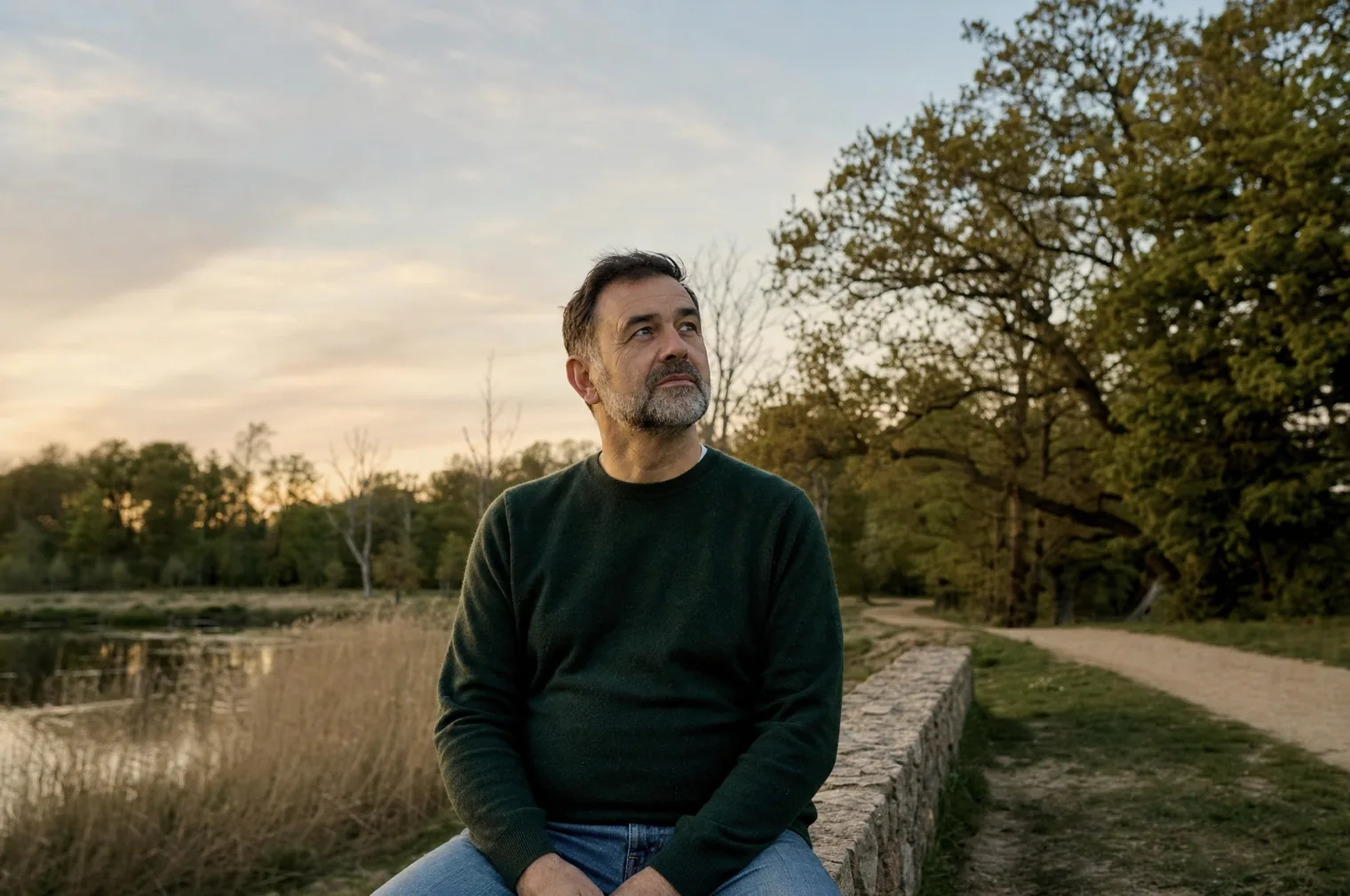
For years I read that as evidence about my character. Poor discipline. Poor routine. Try harder tomorrow.
Look at what was actually running. The tiredness was real and was simply doing its work. The other system was switched on, and nothing I did was aimed at it.¹ ²
A judgement about your character gets you nowhere. Nothing constructive comes out of it. You cannot try harder to be a different person.
A week you have never measured does have a next step. You can put it next to the published research.
1. Staying up later so you are more tired.
Whether you do that is of course up to you, and for some people it works on some evenings.
But understand what it does and does not do. It builds up the pressure system, and yours is already full. It does nothing about the arousal side, and it is that side the review article points to as the key piece in ongoing sleep problems.²
2. Relaxing with the tablet.
That is what most people do, and the research the researchers themselves cite says that 90 per cent of adults use a screen within an hour of bedtime on at least a few evenings a week.³
What it does: it fills the last hour of your evening. What it does not do: help you fall asleep. In their experiment the evening with the light emitting screen produced a longer time to fall asleep, less sleepiness in the evening, less melatonin, a later body clock, and less alertness the next morning, all five compared with the same people reading a paper book.³

3. The afternoon coffee.
How you use caffeine is of course up to you.
But understand what caffeine does and does not do here. In the study above, 400 milligrams six hours before bedtime still disturbed sleep significantly, measured at home with a validated monitor.⁴ The authors note that this is exactly why the standard advice keeps six hours between caffeine and bedtime, and that hardly any research had been done on that before their study.
4. Trying harder to fall asleep.
This is the honest one, and the review article names it by name. Among the factors that keep the problem going are sleep behaviour that does not help, learned associations that hold sleep back, and worrying or ruminating.²
What that means is simple. Making an effort is arousal. Putting more of it into the thing you are trying to switch off works against you instead of for you.
Four moves, one shared problem: none of them starts with what is actually going on with you.
The advice failed here, and it was the sensible sounding kind. You did nothing wrong. It can be different.
This is the essence. If two systems determine your night, then the useful question is not what you should do about sleep in general.
The question is: which of those two is mine?
A night where you cannot get to sleep is a different night from one where you cannot stay asleep, and those two are both different again from a night that runs its full length and gives you nothing.
That is what the research made available. Borbély and colleagues set out how sleep pressure and the clock work together.¹ Riemann and colleagues showed that with persistent sleep problems the measurements point to the alarm level rather than to a shortage of sleepiness, day and night.²
What there was not: a way to lay your own week alongside it.
On one condition. That analysis has to be about you: how long you take to get to sleep, how often you wake up, how often you wake up rested, how satisfied you are, and what your day pays for it. A general list of sleep tips does not tell you which of those two systems describes your week.
And one thing out loud, because that is the honest limit. This is a questionnaire. It gathers your complaint. It does not measure a night, it says nothing about what your brain is doing at three in the morning, and it is never a clinical category.
BioProfile has built that first step. A scientifically validated questionnaire, five minutes, free and with no account.
You answer questions about your nights and about your days. Then you see which signals in your profile speak loudest, and what the research says about them.
Not a medical examination. An analysis of your own answers. You use the outcome yourself, or you put it on the table with your doctor or your coach.
There is nothing to buy at the end. Not on this subject. I have nothing to sell you here. What there is, is your own answers, read properly for the first time.
You do the free check. Five minutes, no account, and there is nothing to buy.
Even if you do nothing with it, you have traded "then I must not be tired enough yet" for an analysis of your own answers. That trade is worth five minutes.
And the next time you are lying flat on your back at half past eleven with your eyes open, you will know which of those two systems is doing it.
Do it now, while this page is still open. Tonight is coming either way.
Our scientifically validated questionnaire gives you answers
The scan is not a medical examination. It is an analysis of your own answers. If complaints persist, consult your doctor.