
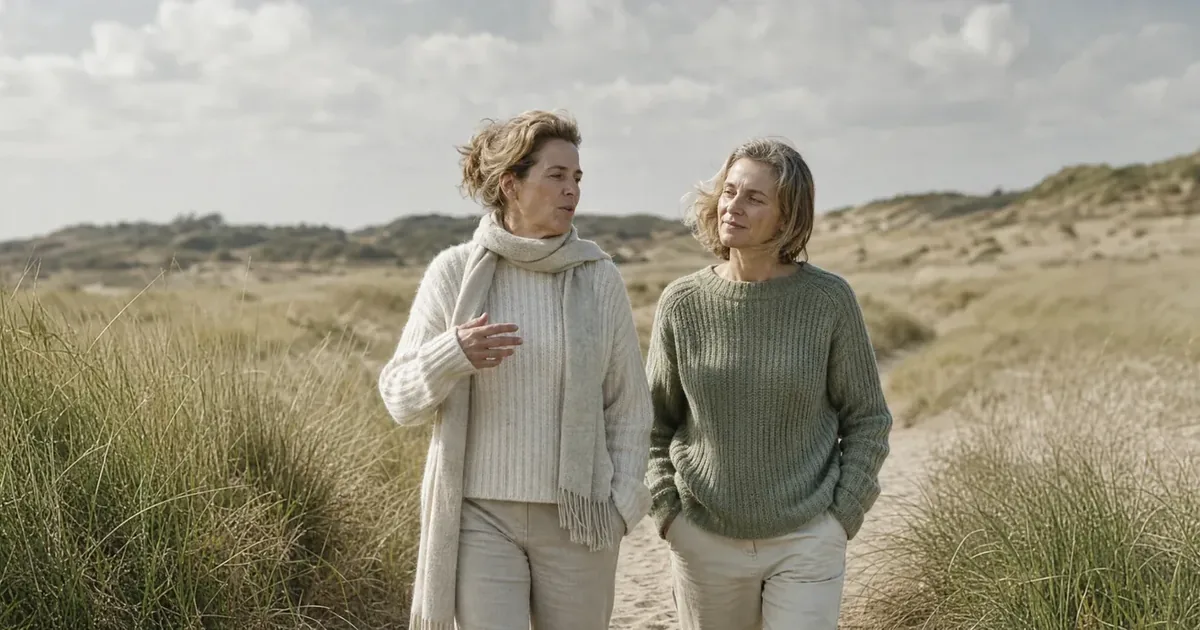
In this article you will read what poor recovery after exercise usually comes down to: the night before, the load you asked of a body in the shape it was in that day, and what you ate and drank around the session. That matters, because those three have been measured in controlled studies, which makes them the parts you can change yourself and then follow. You train the way you always train, and two days later your legs are heavy, the session feels worse than last week and your mood is flat. The BioProfile recovery scan measures how much these complaints bother you, and gives you an indication of where you stand today in this area, as the first of the 11 health areas that the full scan assesses. This is not a diagnosis. It is insight, to see where you stand today. And to help you make better choices in your food and lifestyle. What this scan does not do: point to a cause or make a diagnosis. Only a doctor can do the latter.
Verified by Justinas Šlikas, PhD
PhD in chemistry from the University of Edinburgh
Checked on 2 October 2026
In short
- A night of 6 hours of sleep or less within a 24 hour period lowered next-day sports performance by an average of 7.56 per cent, and tasks in the afternoon and the evening were affected the most strongly.1
- Extra protein from food gave a better recovery of strength at 24, 48 and 72 hours after a strength session, and changed nothing about muscle soreness.2
- A large dose of alcohol after training left myofibrillar protein synthesis over the 8 hours afterwards 24 per cent lower than with protein alone.3
- A recovery scan measures how much poor recovery after exercise is bothering you and gives you a baseline value. The scan points to no cause and is not a diagnosis.
Contents
- Poor recovery after exercise: why you feel awful after a workout
- Sleep is the most measured factor
- What you eat and drink around training
- What you can adjust from day to day
- How much exercise counts as a normal week
- When to see your GP
- What the recovery scan measures
- In summary
- Frequently asked questions
Poor recovery after exercise: why you feel rotten after a session
A heavy or unfamiliar strength session leaves muscle damage behind, and strength is the honest measure of it. In a review of 29 studies and 40 trials with 763 participants, 94 per cent of them young men with a mean age of 18 to 39 years, extra protein from food gave a better recovery of the dynamic maximal voluntary contraction at 24 hours (effect size 0.639, 95 per cent CI 0.116 to 1.162), at 48 hours (0.447, 0.104 to 0.790) and at 72 hours (0.569, 0.136 to 1.002). The same review found no effect of extra protein on muscle soreness at any measurement point.2
In plain words: a damaged muscle does come back, and that takes days. Protein shifts the strength curve; the feeling of muscle soreness does not shift with it. Muscle soreness is therefore a weak measure of where your recovery really stands.
Sleep is the most measured factor
A meta-analytic review pooled 227 outcome measures from 69 publications and 959 participants, 89 per cent of them men. A night of 6 hours of sleep or less within a 24 hour period lowered next-day sports performance by an average of 7.56 per cent (95 per cent CI 11.9 to 3.13 lower, p=0.001). Performance dropped by about 0.4 per cent for every extra hour awake before the task, and tasks in the afternoon and the evening were consistently affected while tasks in the morning were largely left untouched.1
So the workout that felt impossible may say more about the night before than about your form, and an evening workout carries a short night the furthest.
Sleeping more works the other way round. In 11 healthy male student basketball players, average age 19.4 plus or minus 1.4 years, measured sleep rose from 400.7 plus or minus 61.8 to 507.6 plus or minus 78.6 minutes a night when they slept longer for 5 to 7 weeks (P less than 0.001). Sprint time went from 16.2 plus or minus 0.61 to 15.5 plus or minus 0.54 seconds, and self reported fatigue on the POMS fell from 8.24 plus or minus 5.28 to 1.45 plus or minus 2.46 while energy rose from 11.71 plus or minus 5.31 to 18.14 plus or minus 5.57 (all P less than 0.001).4
That is a small group of young athletes and a lot of extra sleep, so read it as a direction rather than a promise. The biggest change was in how tired the players felt.
The variation from night to night counts too. In 98 Dutch elite athletes (56 women, 42 men), mean age 18.8 plus or minus 3.0 years, average total sleep time, measured on three non-consecutive nights within 7 days, was 7:30 plus or minus 1:05 hours, with a variation of 57.14 plus or minus 38.48 minutes between days. Longer sleep was linked to a faster reaction time on the 10-minute psychomotor vigilance task (B = 0.070 faster, p = 0.04, about 5 milliseconds per extra hour), while the sport-specific motor tests showed only small and inconsistent associations.5
Sleep shows up first in attention and only weakly in skill. An extra hour is not an extra hour of technique.
What you eat and drink around your training
Healthy people need an average of 0.83 grams of protein per kilogram of body weight per day, and dedicated strength athletes who want to gain more muscle mass are advised 1.2 to 2 grams per kilo per day. About 20 grams per eating moment, spread evenly over the day, is good for muscle recovery, and Dutch men aged 19 to 50 already sit at an average of 91 to 98 grams a day and women at 68 to 72 grams.6 Most people do not fall short on protein. The spread over the day is the part that is worth changing.
Alcohol is the other side of the same evening. In 8 physically active men, mean age 21.4 plus or minus 4.8 years, a randomised crossover trial gave 1.5 g of alcohol per kg of body weight (12 plus or minus 2 standard drinks) straight after training and again 4 hours later. Myofibrillar protein synthesis over the 8-hour window was 24 per cent lower than with protein alone, and 37 per cent lower than with protein alone when the alcohol was taken together with carbohydrate.3
That is a heavy drinking dose in a small group, so nobody can tell you what two drinks do. The direction is clear: alcohol on a training evening works against what the muscle does with the protein you have eaten.
What you can steer from day to day
Eight studies with 199 participants aged 22 to 39 (106 in training steered by heart rate variability, 93 in a programme fixed in advance) ran for 2 to 8 weeks. Letting the daily heart rate variability measurement steer the load came out favourably for its vagal measures (standardised mean difference 0.50, 95 per cent CI 0.09 to 0.91), while resting heart rate (SMD 0.04, 95 per cent CI -0.34 to 0.43) and VO2max (SMD 0.13, 95 per cent CI -0.12 to 0.39) showed only trivial and non-significant differences.7
Read that as an argument for steering rather than for a better end score. A daily number can tell you on which day you go hard. The fitness you end up at looks about the same in both cases.
How much exercise is a normal week
The Dutch physical activity guideline asks adults and older adults for at least 150 minutes a week of moderately intensive exercise such as walking and cycling, spread over several days, where moving longer, more often or more intensively gives extra health benefit, plus muscle and bone strengthening activities at least twice a week, for older adults combined with balance exercises.8 In 2025, 47 per cent of people in the Netherlands aged 4 and over met both parts: 48 per cent of adults aged 18 to 64 and 41 per cent of people aged 65 and over.9
This is the floor for health. It is not a training plan. If your week sits well above it and every workout still feels like a wall, then the load itself is a plausible candidate.
When to see your GP
See your GP if the tiredness lasts a long time, for example longer than a month. Go as well if you are tired and other symptoms come with it: sweating a lot, less appetite, a change in weight, changed stools, shortness of breath, a lot of thirst and passing a lot of urine, heart palpitations, a low mood or anxiety.10 The same page advises 30 minutes of exercise 5 times a week, regular breaks, no alcohol or drugs, and fixed sleep habits.10
What the recovery scan measures
The scan asks about the past two weeks: how the day after a workout goes, how long the heaviness stays, how you sleep in the nights around training, and how much the load still weighs on you. The answers become a recovery score with the reading band the score falls into. Higher is better. What you get is a baseline value, so that in two weeks you have two numbers instead of a memory of a feeling. The scan points to no cause and is not a diagnosis.
In summary
Poor recovery after exercise is mostly a story about sleep, load and what you drink around your training. Short sleep lowers your performance the next day, and more sleep brings it back, most clearly in how tired you feel and how fast you react. A hard session costs you days of strength, extra protein brings that strength back faster, and muscle soreness follows a track of its own. Alcohol after training works against the protein. A daily measurement of heart rate variability helps you steer your week. The physical activity guideline is a lower limit, not a plan. A recovery scan gives you a number to start from, and tiredness that lasts longer than a month belongs with your GP.
Measure where you start
A few questions about the past two weeks and your recovery score is in your dashboard. What the recovery scan measures and what the scan is based on is on the scan page.
Free, about 3 minutes. An analysis of your answers, never a diagnosis. All health scans
Frequently asked questions
Why do I feel bad after exercise?
Two things have been measured often. Short sleep: 6 hours or less in a 24 hour period lowered sports performance the next day by 7.56 percent on average, most clearly in tasks in the afternoon and the evening.1 And muscle damage from a hard strength session, which shows up as a loss of strength over 24 to 72 hours.2 Alcohol on a training evening works against the protein you have eaten.3
Can a damaged muscle recover?
Yes, and the honest measure of that is strength rather than feeling. In a review of 29 studies and 40 trials with 763 participants, the dynamic maximal voluntary contraction was followed at 24, 48 and 72 hours after the session, and extra protein from food gave a better recovery at each of those points.2 Muscle soreness ran its own course: extra protein changed muscle soreness at no measurement point.2
How do you recognise overtraining?
The sources used here give no checklist of signals. What has been tested is the reverse approach: letting the daily heart rate variability measurement steer the training load. Across programmes of 2 to 8 weeks that came out favourably for the vagal measures of heart rate variability (SMD 0.50, 95 per cent CI 0.09 to 0.91), while resting heart rate and VO2max differed only trivially from a programme fixed in advance.7 If the tiredness lasts longer than a month, or other complaints come with it, go and see your GP.10
Which exercise for fibromyalgia?
The sources used here say nothing about which sport suits fibromyalgia. The Dutch physical activity guideline names moderately intensive exercise such as walking and cycling, at least 150 minutes a week spread over several days, plus muscle and bone strengthening activities at least twice a week.8 With a complaint that persists, what suits you is a question for a doctor.10
How much protein do I need for muscle recovery?
Healthy people need an average of 0.83 grams per kilogram of body weight per day, and dedicated strength athletes who want to gain more muscle mass are advised 1.2 to 2 grams per kilo per day. About 20 grams per eating moment, spread evenly over the day, is good for muscle recovery. Dutch men aged 19 to 50 already sit at an average of 91 to 98 grams a day and women at 68 to 72 grams.6
What does the recovery scan not measure?
A cause. Short sleep, a heavy training week, alcohol and a low mood all read the same way in a questionnaire. The scan gives you a starting value and a reading band. It is not a diagnosis, and only a doctor can make one.
Sources
Every source below was checked on the day this article was published. The numbering follows the text.
- Craven J, McCartney D, Desbrow B, Sabapathy S, Bellinger P, Roberts L, Irwin C. Effects of Acute Sleep Loss on Physical Performance: A Systematic and Meta-Analytical Review. Sports Medicine, 2022. doi.org/10.1007/s40279-022-01706-y
- Pearson AG, Hind K, Macnaughton LS. The impact of dietary protein supplementation on recovery from resistance exercise-induced muscle damage: a systematic review with meta-analysis. European Journal of Clinical Nutrition, 2022;77(8):767-783. doi.org/10.1038/s41430-022-01250-y
- Parr EB, Camera DM, Areta JL, Burke LM, Phillips SM, Hawley JA, Coffey VG. Alcohol Ingestion Impairs Maximal Post-Exercise Rates of Myofibrillar Protein Synthesis following a Single Bout of Concurrent Training. PLOS ONE, 2014;9(2):e88384. doi.org/10.1371/journal.pone.0088384
- Mah CD, Mah KE, Kezirian EJ, Dement WC. The effects of sleep extension on the athletic performance of collegiate basketball players. Sleep, 2011;34(7):943-950. doi.org/10.5665/SLEEP.1132
- Knufinke M, Nieuwenhuys A, Maase K, Moen MH, Geurts SAE, Coenen AML, Kompier MAJ. Effects of Natural Between-Days Variation in Sleep on Elite Athletes’ Psychomotor Vigilance and Sport-Specific Measures of Performance. Journal of Sports Science and Medicine, 2018;17(4):515-524. PMID 30479518. pmc.ncbi.nlm.nih.gov
- Voedingscentrum. Heb je extra eiwit (proteine) nodig als je sport? voedingscentrum.nl
- Manresa-Rocamora A, Sarabia JM, Javaloyes A, Flatt AA, Moya-Ramon M. Heart Rate Variability-Guided Training for Enhancing Cardiac-Vagal Modulation, Aerobic Fitness, and Endurance Performance: A Methodological Systematic Review with Meta-Analysis. International Journal of Environmental Research and Public Health, 2021;18:10299. doi.org/10.3390/ijerph181910299
- Gezondheidsraad. Beweegrichtlijnen 2017. No. 2017/08, Den Haag, 22 August 2017. gezondheidsraad.nl
- RIVM, Sport en bewegen in cijfers. Kernindicator Beweegrichtlijnen, based on the Gezondheidsenquete/Leefstijlmonitor from CBS and RIVM. sportenbewegenincijfers.nl
- Thuisarts.nl (NHG). Ik ben moe. Wat kan ik eraan doen? thuisarts.nl
Also read
Written by

BioProfile analyses your health status to guide you and your coach. It does not make a diagnosis, only a doctor can do that. Built on validated health questionnaires; the combined BioProfile score is not itself a validated clinical instrument yet. Your answers stay private (GDPR).