
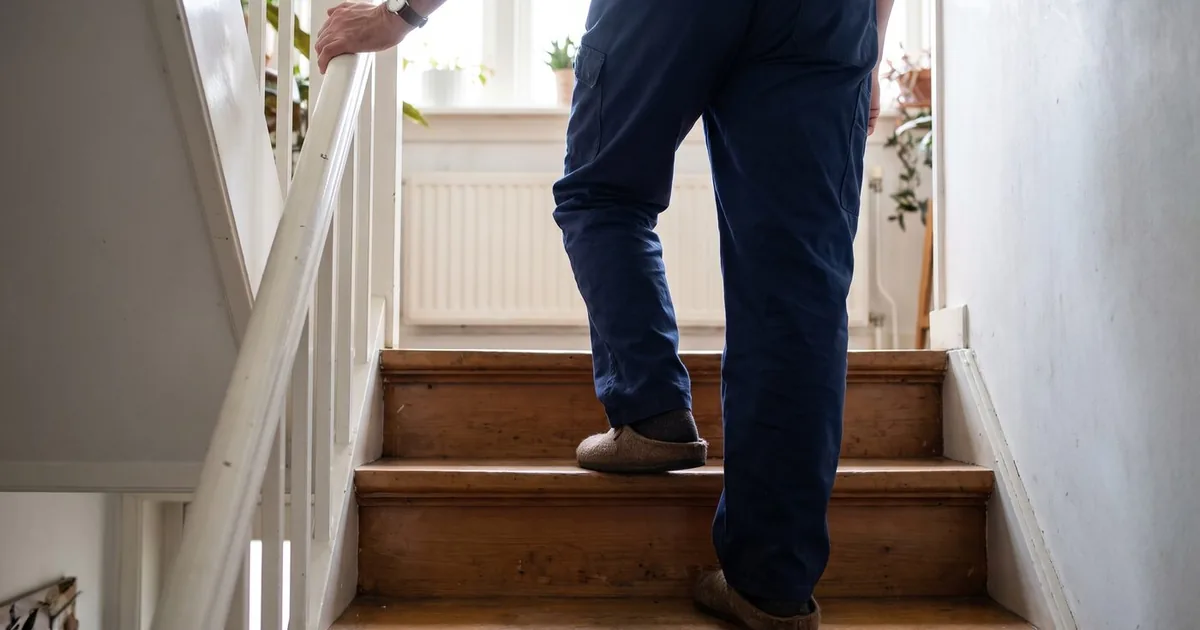
In this article you will read why some people feel tired after the slightest effort, what Dutch research into ME/CFS and long covid has found about it, and when the tiredness is a reason to call your GP. That matters, because feeling worn out after a flight of stairs or a trip to the shops can have very ordinary causes, and sometimes a cause a doctor needs to look at. The BioProfile energy scan measures how much tiredness you are carrying and gives you an indication of where you stand on this today. The scan gives you self-insight, meant to help you make better choices in your diet and lifestyle. The scan does not point to a cause. It is not a diagnosis, and only a doctor can look for a cause.
Verified by Carlos Mendoza Montano
Doctorate in nutritional biochemistry from the University of Arizona
Reviewed on 29 October 2026
In short
- With ME/CFS, a small physical or mental effort can make the symptoms worse, and the fatigue does not go away with rest.1
- About half of the people who still have symptoms three months or more after COVID-19 have a relapse after exertion, which researchers call post-exertional malaise.2
- See your GP if the fatigue lasts longer than a month, or if other symptoms appear, such as sweating at night or feeling short of breath with little effort.3
- An energy scan measures how much fatigue you are carrying and gives you a starting point. The scan does not identify a cause. It is not a diagnosis.
Contents
Why you can feel tired after the slightest effort
Thuisarts, the public website of Dutch GPs, lists many possible causes of tiredness: worry and stress, too little exercise, an unhealthy diet, being overweight, smoking, alcohol or drugs, an infection such as flu or corona, diabetes, a thyroid problem, problems with the heart and blood vessels, long-term pain, ME/CFS and side effects of medicines such as antihistamines.3 Alcohol is on that list, and how long you stay tired after you stop drinking alcohol has a page of its own. If your energy mainly drops after lunch rather than after exertion, you are better off starting with the afternoon slump.
What makes “tired after the slightest effort” different is that the effort itself makes the symptoms worse. In ME/CFS, even a small physical or mental effort can make the symptoms worse.1 In long covid, researchers call this a relapse after exertion, or post-exertional malaise.2
ME/CFS: tiredness that rest does not take away
With ME/CFS, a person has been doing much less than usual for more than six months in a row and is severely tired, in a way that does not come from exertion and does not go away with rest.1 Almost everyone with ME/CFS sleeps badly, and orthostatic intolerance is common: dizziness, nausea, headaches and weakness.4 In 2018 the Gezondheidsraad estimated that 30,000 to 40,000 people in the Netherlands have ME/CFS, most of them women, and described the chance of a full recovery as small.4 Care focuses on living with the symptoms. For example, an occupational therapist can help you spread your energy, and a physiotherapist can work within your own limits.1
What this means for you: ME/CFS is a real and serious condition, and the name only applies after more than six months. Feeling worn out for a few weeks is a reason to look at the everyday causes first, and to see your GP if it carries on.
Long covid: tiredness that stays after an infection
In the Lifelines cohort in the north of the Netherlands, 76,422 participants filled in questionnaires during the pandemic, and 4,231 people with COVID-19 were compared with 8,462 similar people without COVID-19. Among the 1,782 people with COVID-19 and the 4,130 without it who had enough data, about one in five of those with COVID-19 had at least one core symptom that had clearly increased after 90 to 150 days, compared with fewer than one in ten of those without COVID-19. In about one in eight, the symptoms can be attributed to the infection, and general tiredness and heavy arms or legs were among them.5
The RIVM’s VASCO cohort followed 22,705 first infections. Severe fatigue was already present before the infection in 18.5 per cent of participants, rose during the infection to 24.4 per cent (Delta) and 22.5 per cent (Omicron), and was 21.2 and 18.9 per cent 90 days later. Average fatigue stayed raised for at least 270 days after Delta and 120 days after Omicron, and the researchers describe the effect on severe fatigue across the whole population as modest.6
What this means for you: many people were already tired before an infection, and on average the infection added a little to that. Thuisarts adds that about half of all people with symptoms after COVID no longer have any symptoms after three months, that most of the others recover in the months that follow, and that few people keep symptoms for longer than six months. It is not known how this applies to tiredness.7
What the muscles show after exertion
A systematic review brought together 12 studies with 2,665 patients. About half of the people with symptoms three months or more after COVID-19 had a relapse after exertion.2
In Amsterdam, 25 people with long COVID and 21 people without it did an exercise test, with small samples of muscle taken before the test and a day after. At their maximum, the long COVID group could manage clearly less, and their muscles contained more fast-tiring fibres. A day after the exertion, the activity of an energy enzyme in the muscle’s mitochondria fell in the long COVID group, and muscle damage and protein deposits increased. The control group showed no similar fall.8
What this means for you: in the 25 people with long COVID and post-exertional malaise in this small study, several abnormalities in the muscle got worse after maximal exertion. These are measurable changes in the body.
When to see your GP
Contact your GP if the tiredness lasts longer than a month. Also get in touch if other symptoms appear alongside it: sweating more than usual at night, less appetite, weight that drops without you trying, a change in your bowel movements, feeling short of breath with little effort or at rest, a lot of thirst and needing to pee often, palpitations, or feeling very low, very tense or restless.3 After COVID, contact your GP if the tiredness stays despite what you do yourself, or if other symptoms appear, such as a cough that does not go away, less appetite, a large drop in your weight, muscle weakness, pain, low mood or anxiety, or confusion.7
What an energy scan measures
The energy scan asks about your energy through the day, energy dips, how much you rely on caffeine, getting physically tired and being too exhausted to do things. Your answers are converted into an energy score from 0 to 100, where higher is better. That score shows how much fatigue you are carrying and gives you a starting point to compare against later.
A questionnaire cannot tell ME/CFS, long COVID, a thyroid problem or poor sleep apart, because in the answers they all look the same. The scan is not a diagnosis. Looking for the cause is work for a doctor.
In summary
Tiredness after a small effort can have everyday causes. If the effort itself keeps making your symptoms worse, that can fit with ME/CFS or long covid, and Dutch studies show both the size of that group and changes in the muscle after exertion. Thuisarts sets out when to call your GP. An energy scan gives you a starting value for how much tiredness you are carrying.
Frequently asked questions
Why does a short effort make me so tired?
Often it comes down to everyday things such as worry and stress, too little exercise, smoking or alcohol, and sometimes to an infection, diabetes, a thyroid problem or a heart problem.3 If even a small effort clearly makes your symptoms worse for a longer time, that can fit with ME/CFS or long covid.1,2 What it is in your case is for a doctor to assess.
Why do I feel flu-like every evening?
The sources in this article do not explain why it happens in the evening in particular. An infection such as flu or COVID can make you tired on its own,3 and with ME/CFS, muscle pain, joint pain, a sore throat and fever can occur alongside the fatigue.1 If this feeling keeps coming back, talk to your GP about it.
Why do I feel sick after light exertion?
Nausea, along with dizziness, headache and weakness, is part of orthostatic intolerance, which is common in ME/CFS, especially when sitting or standing upright.4 The source does not explain why you feel sick after light exertion, so ask your GP about it if it keeps happening.
Is the energy scan a test for ME/CFS or long covid?
No. The scan measures how much tiredness you are carrying and where you stand today. The scan cannot tell ME/CFS, long covid and a thyroid problem apart. It is not a diagnosis.
Sources
Every source below was checked on the day this article was published. The numbering follows the text.
- Thuisarts.nl (NHG). Ik heb ME/CVS, wat kan ik doen en wie helpt? thuisarts.nl
- An Y, Guo Z, Fan J, Luo T, Xu H, Li H, Wu X. Prevalence and measurement of post-exertional malaise in post-acute COVID-19 syndrome: A systematic review and meta-analysis. General Hospital Psychiatry, 2024. Pooled prevalence 0.55 (95% CI 0.38 to 0.71). doi.org/10.1016/j.genhosppsych.2024.10.011
- Thuisarts.nl (NHG). I am tired. What could it be? thuisarts.nl
- Gezondheidsraad. ME/CVS. Den Haag: Gezondheidsraad, 2018; publication no. 2018/07 (Summary). gezondheidsraad.nl
- Ballering AV, van Zon SKR, Olde Hartman TC, Rosmalen JGM; Lifelines Corona Research Initiative. Persistence of somatic symptoms after COVID-19 in the Netherlands: an observational cohort study. Lancet, 2022;400(10350):452-461. doi.org/10.1016/S0140-6736(22)01214-4
- Huiberts AJ, de Bruijn S, Andeweg SP, Hoeve CE, Schipper M, de Melker HE, van de Wijgert JH, van den Hof S, van den Wijngaard CC, Knol MJ. Prospective cohort study of fatigue before and after SARS-CoV-2 infection in the Netherlands. Nature Communications, 2025. doi.org/10.1038/s41467-025-56994-5
- Thuisarts.nl (NHG). Ik blijf moe na corona. thuisarts.nl
- Appelman B, Charlton BT, Goulding RP, Kerkhoff TJ, Breedveld EA, Noort W, Offringa C, Bloemers FW, van Weeghel M, Schomakers BV, Coelho P, Posthuma JJ, Aronica E, Wiersinga WJ, van Vugt M, Wüst RCI. Muscle abnormalities worsen after post-exertional malaise in long COVID. Nature Communications, 2024;15. doi.org/10.1038/s41467-023-44432-3
Also read
Written by
Measure where you start
Answer a short set of questions about the past few weeks, and your energy score appears in your dashboard. What the energy scan measures and what it is based on is explained on the scan page.
Free, about 3 minutes. An analysis of your answers, never a diagnosis.
BioProfile analyses your health status to guide you and your coach. It does not make a diagnosis, only a doctor can do that. Built on validated health questionnaires; the combined BioProfile score is not itself a validated clinical instrument yet. Your answers stay private (GDPR).